Built for the Long Haul: The Development Story Behind Our LandCruiser Cupholders
When GridShift set out to design a direct-replacement cupholder for the LandCruiser, the objective was straightforward: create something that endures genuine work conditions. Not display-oriented use. Not recreational touring. Real, continuous operational demands.
Numerous aftermarket options exist — but very few function as true direct replacements that avoid cutting, drilling, or factory trim modifications. This requirement remained paramount from the project's inception.
Real Testing. Real Vehicles. Real Conditions.
These cupholders underwent actual field validation, not laboratory bench testing.
Installation occurred across three distinct LandCruisers:
- One personal daily-use vehicle
- Two full mine-specification units
Testing transpired in the Pilbara region, where extreme temperatures, dust, vibration, and relentless stress characterise the environment. Survival there demonstrates resilience everywhere.
One mine vehicle became the primary benchmark. It has accumulated 80,000km since initial prototype installation — traversing rough access roads, corrugated surfaces, extreme heat conditions, frequent entry/exit cycles, and standard fleet vehicle abuse patterns.
The featured photograph displays that original prototype following two years of intensive use. No special maintenance. No protective coatings. Only operational work.
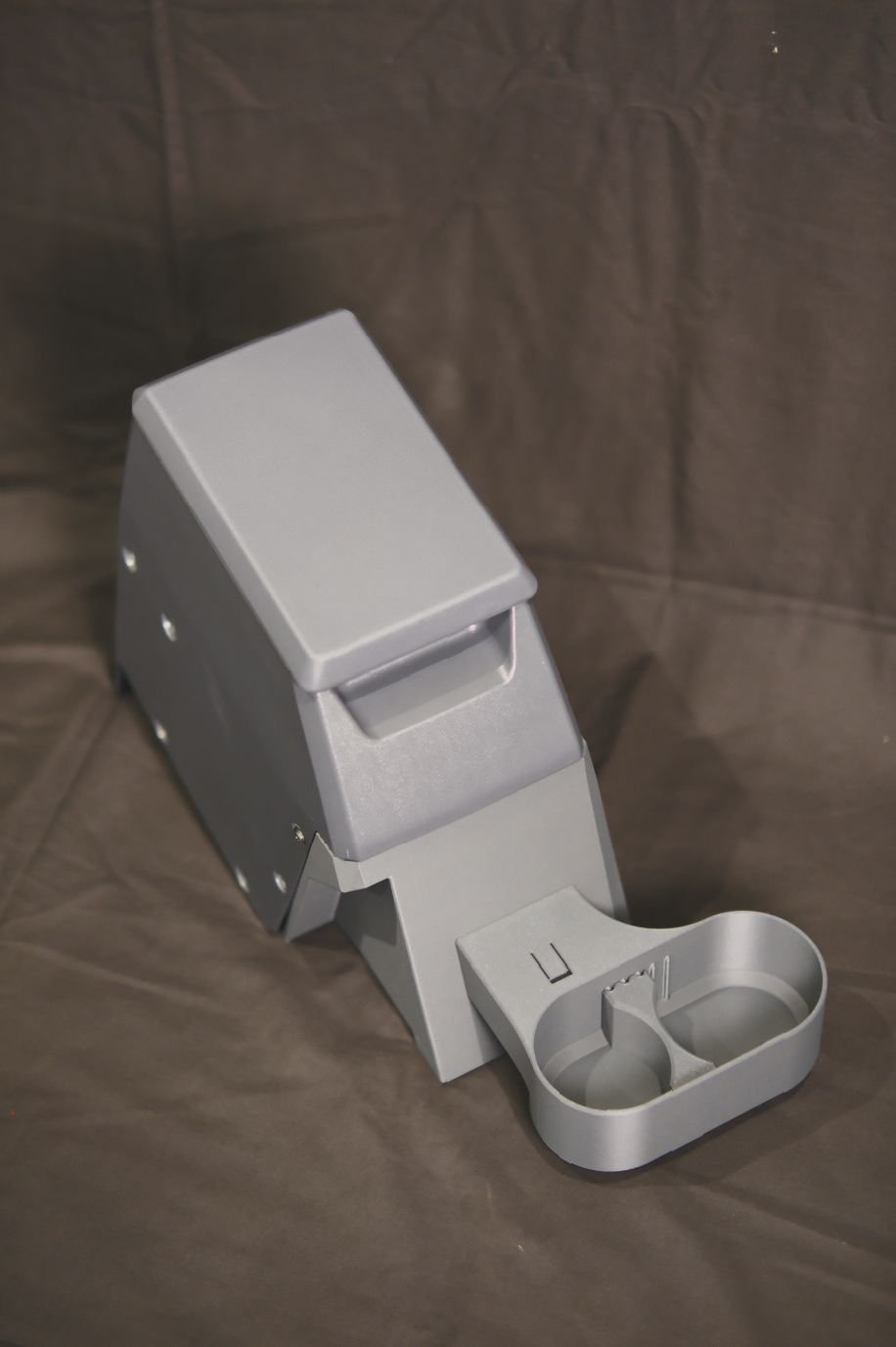
This vehicle was deliberately selected for engineering assessment because it experienced the most severe conditions among the three test units. If structural failure would occur anywhere, this location represented the highest probability scenario.
Failure did not occur.
The remaining two installations maintain near-pristine appearance — validating structural integrity and material longevity across varying usage scenarios.
Engineering Feedback → Design Evolution
GridShift maintains an iterative development philosophy rather than a static release approach.
Following extended operational experience and user input, one recurring suggestion emerged:
"It would be great to have a moveable or adjustable cup slot to better suit different drink sizes."
This feedback proved legitimate.
Development teams returned to computer-aided design work. Load path analysis was conducted. Stress concentration areas received reinforcement. Manufacturing tolerances underwent refinement.
The outcome represents a more robust, customisable design incorporating adjustable functionality while preserving structural performance.
Crucially, this advancement maintained adherence to original specifications:
- ✓ Direct replacement capability
- ✓ No drilling required
- ✓ No cutting required
- ✓ No OEM component modification
Few manufacturers can substantiate such integration standards.
Designed for Use — Not Just Looks
This constitutes a functional enhancement, not aesthetic improvement.
The design addresses operational vehicle requirements:
- Built to withstand thermal and ultraviolet exposure
- Engineered for vibration and corrugation resistance
- Optimised for straightforward installation and factory compatibility
- Refined through authentic operational stress, not theoretical assumptions
GridShift maintains the philosophy that automotive products must demonstrate earned functionality within vehicles. These cupholders have accomplished this objective.